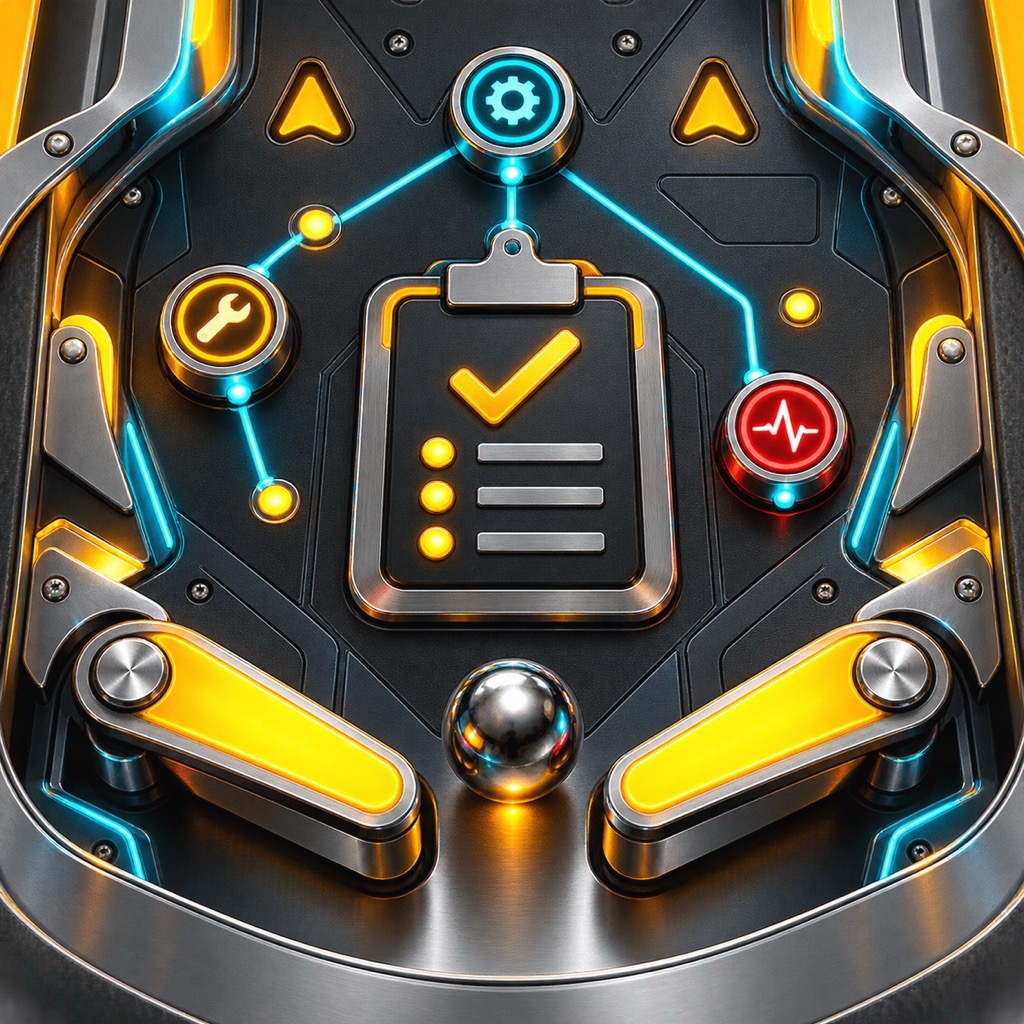
Offline pinball service memory
Flipperledger: Pinball Care
Map faults to the playfield. Preserve the symptom, work, parts, meter, and verification. Hand off evidence instead of scattered notes.
Service history with context
Know what failed, where it failed, and whether the fix held.
Flipperledger turns a machine roster into an evidence trail. Open cases retain reproduction counts, inspections, actions, part lineage, downtime, and verification. Maintenance horizons and recurrence signatures make the next visit more informed.
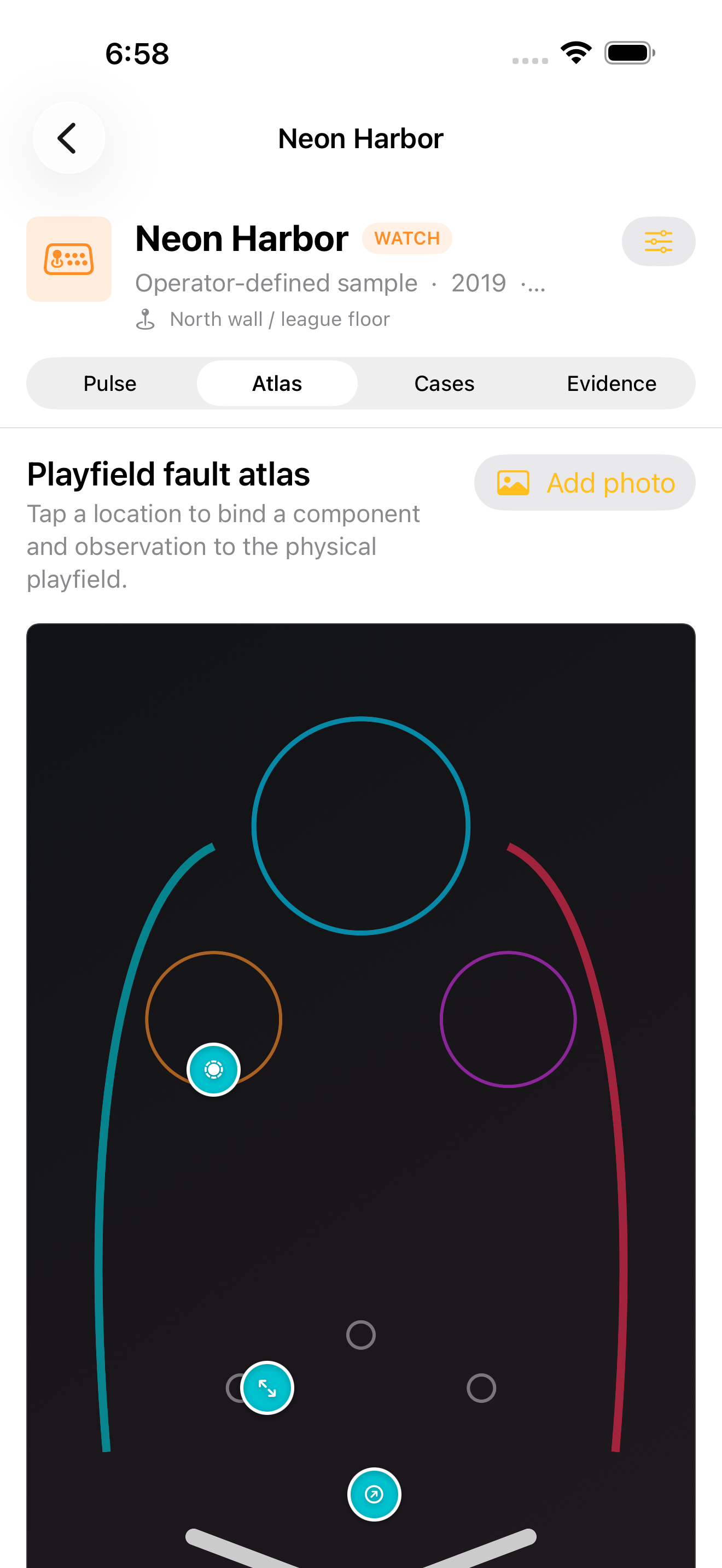
Playfield fault atlas
Bind service memory to the physical machine.
Add a user-selected playfield photo or use the original schematic. Normalized markers remain aligned across screen sizes and can be linked directly to cases.
- Component-specific map markers
- Notes preserved with each location
- No broad photo-library permission
Machine pulse
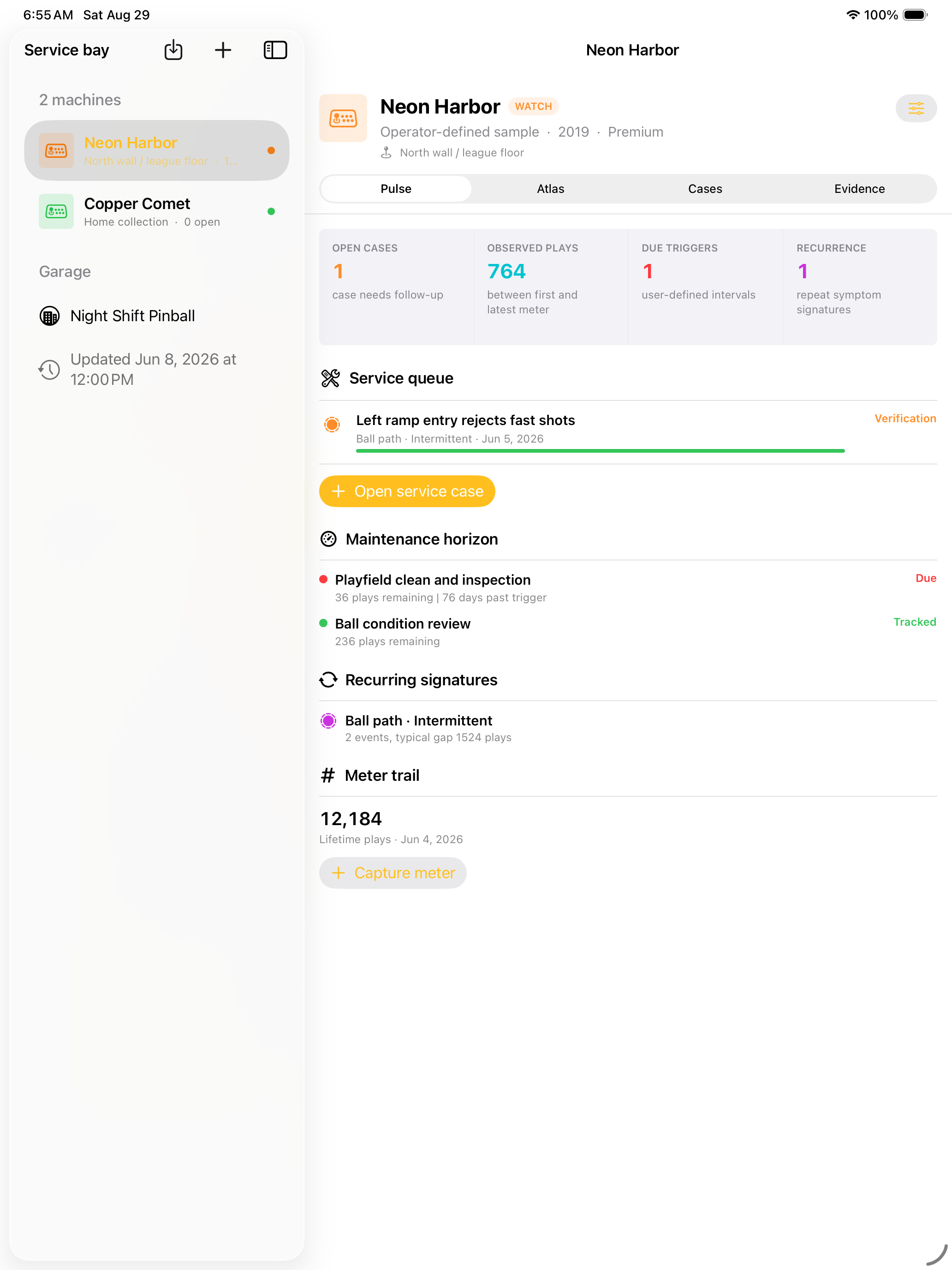
See the service horizon before opening a case.
The pulse combines open work, meter deltas, user-defined maintenance intervals, and recurring symptom signatures. Calculations are deterministic and remain inspectable in the source records.
- Monotonic play-meter checks
- Calendar and play-count triggers
- Typical play gaps between repeat events
Evidence desk
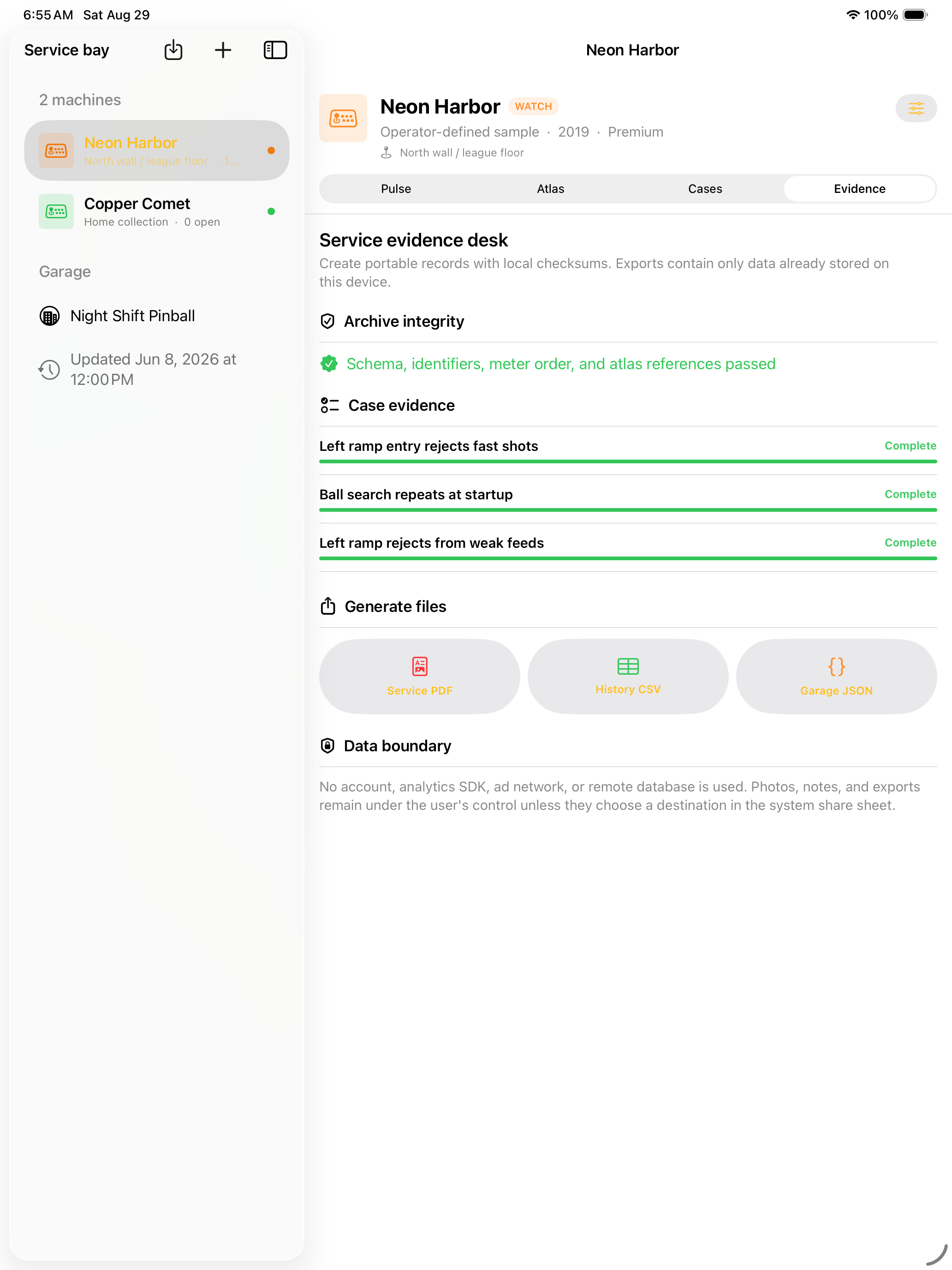
Make a portable handoff without a cloud account.
Case gates identify missing closeout proof before a record is handed off. Generate a readable service PDF, analysis-ready CSV, or validated garage archive. Every file receives a local SHA-256 checksum.
- Readable service packets
- Complete case-history CSV
- Validated JSON backup and transfer
A clear product boundary
Records and planning, not machine diagnosis.
Flipperledger does not connect to, control, diagnose, or certify a pinball machine; provide repair procedures; assess electrical or mechanical safety; or verify part compatibility. Follow the machine manufacturer's documentation and appropriate safety practices, and use a qualified technician when needed.